

Peru’s 2026 Elections: When Political Fragmentation Becomes the System

Heading 1
Heading 2
Heading 3
Heading 4
Heading 5
Heading 6
Lorem ipsum dolor sit amet, consectetur adipiscing elit, sed do eiusmod tempor incididunt ut labore et dolore magna aliqua. Ut enim ad minim veniam, quis nostrud exercitation ullamco laboris nisi ut aliquip ex ea commodo consequat. Duis aute irure dolor in reprehenderit in voluptate velit esse cillum dolore eu fugiat nulla pariatur.
Block quote
Ordered list
- Item 1
- Item 2
- Item 3
Unordered list
- Item A
- Item B
- Item C
Bold text
Emphasis
Superscript
Subscript
On April 12, Peruvians will head to the polls amid a continuous political crisis that has increasingly become the norm this century. The 2026 general elections, which will choose a president and an entirely new bicameral Congress (Senate and Chamber of Deputies), represent more than another democratic exercise—they are a referendum on decades of institutional erosion, party fragmentation, and voter distrust. If recent history is any guide, Peru’s next president may emerge not from political strength but from systemic weakness. Weak party identification, deep distrust toward political elites, and geographic divides between Lima and the regions further complicate the political landscape.
Political Fragmentation as Context for 2026
Peru’s current political instability has deep historical roots. The crisis of hyperinflation and insurgency in the late 1980s destroyed confidence in traditional parties such as APRA and Acción Popular, opening the door to outsider candidates like Alberto Fujimori in 1990. Following Fujimori’s fall in 2001, Peru failed to rebuild strong party structures. Presidents have continued to win elections without durable congressional coalitions, governing through personal mandates rather than institutional platforms.
Since 2016, Peru has experienced extraordinary executive instability. Multiple presidential impeachments and resignations have produced eight presidents in less than a decade, with the constitutional clause of “moral incapacity” repeatedly used to remove leaders. No president elected since 2016 has completed a full term. This pattern has further eroded public confidence in political institutions and contributed to the fragmented electoral environment now visible in the 2026 campaign.
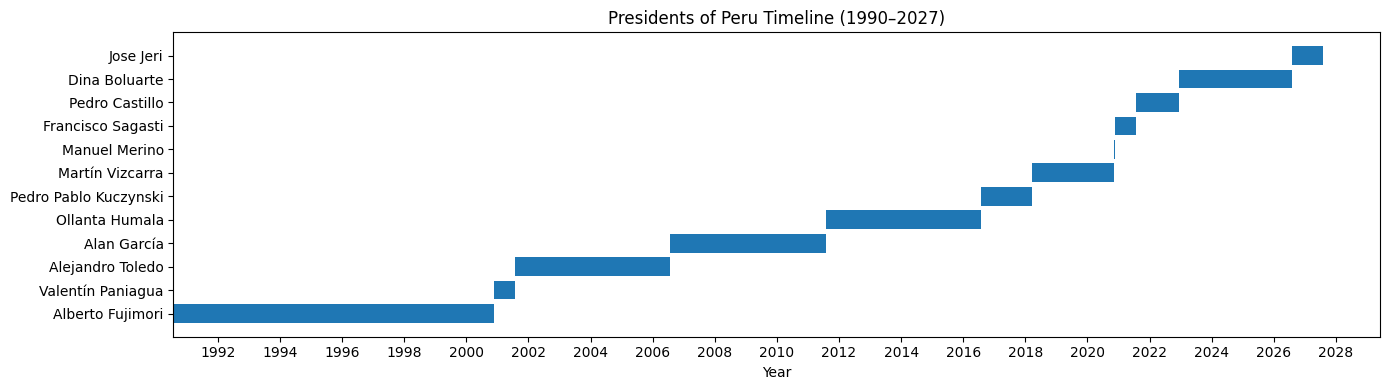
The 2026 election reflects the deepest level of party fragmentation in modern Peruvian history. There are more than three dozen presidential candidates and nearly forty registered political parties, a national record and a significant increase from the 18 candidates who ran in 2021.
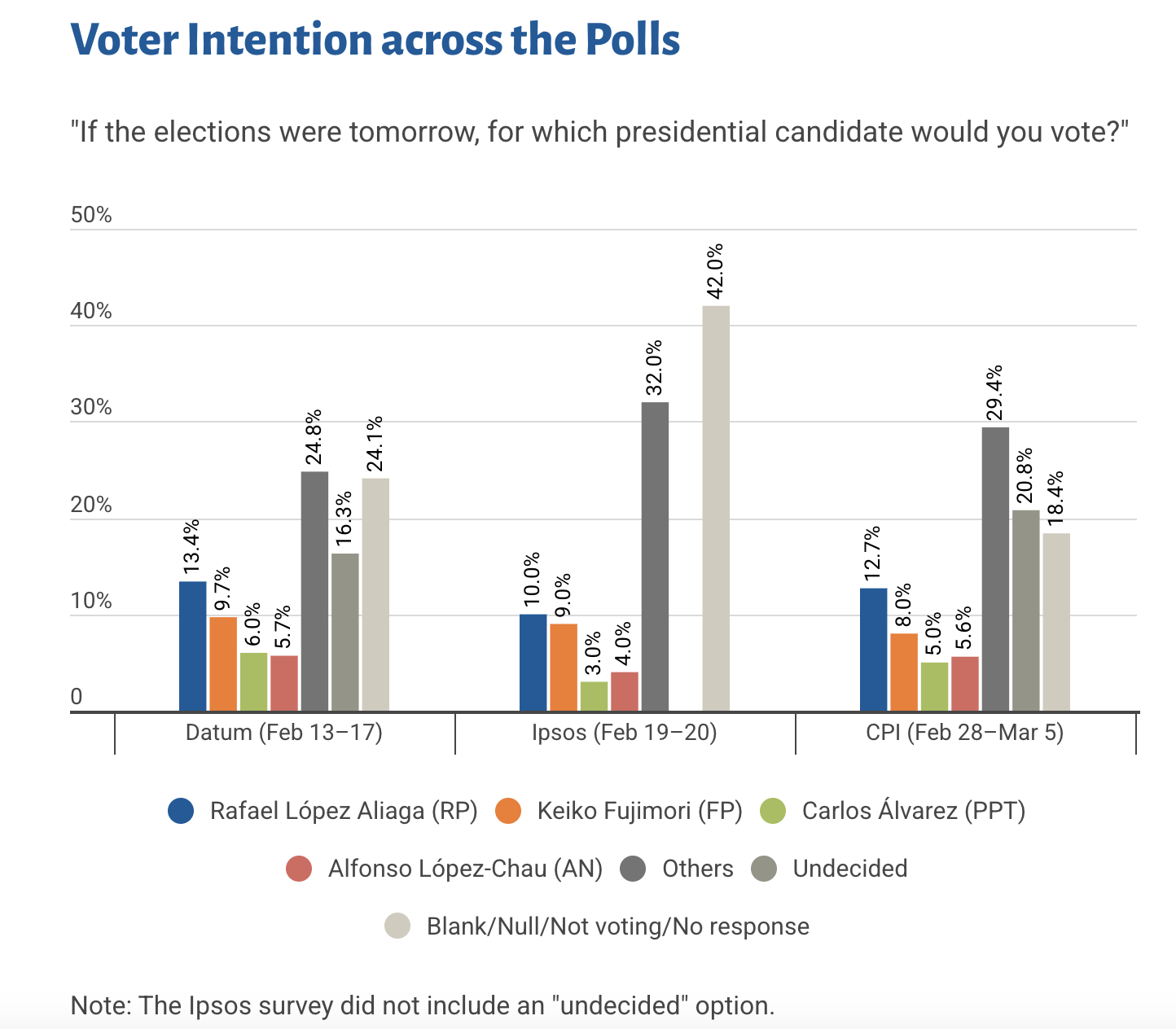
Polling suggests the electorate remains deeply uncertain. Recent surveys show that nearly one-third of voters remain undecided, while additional voters indicate they may cast blank or invalid ballots, meaning that more than four in ten voters are not firmly aligned with any candidate.
Recent polling illustrates this fragmentation. One Ipsos survey shows the leading candidate polling around 12%, followed by Keiko Fujimori at roughly 8–9%, with several candidates tied in the low single digits.
Social Media and the Digital Campaign
Unlike previous electoral cycles dominated by television, radio, and regional rallies, the 2026 campaign is increasingly unfolding across digital platforms. Social media has become a central arena where narratives form, mobilization occurs, and voter sentiment shifts rapidly.
Three dynamics stand out.
- Mobilization and Messaging
Social networks have evolved beyond simple broadcast platforms into arenas for political debate, grassroots organizing, and rapid narrative shifts. Campaign messaging now travels through decentralized online communities rather than traditional media gatekeepers.
For many voters - particularly younger demographics - digital discourse increasingly shapes political engagement.
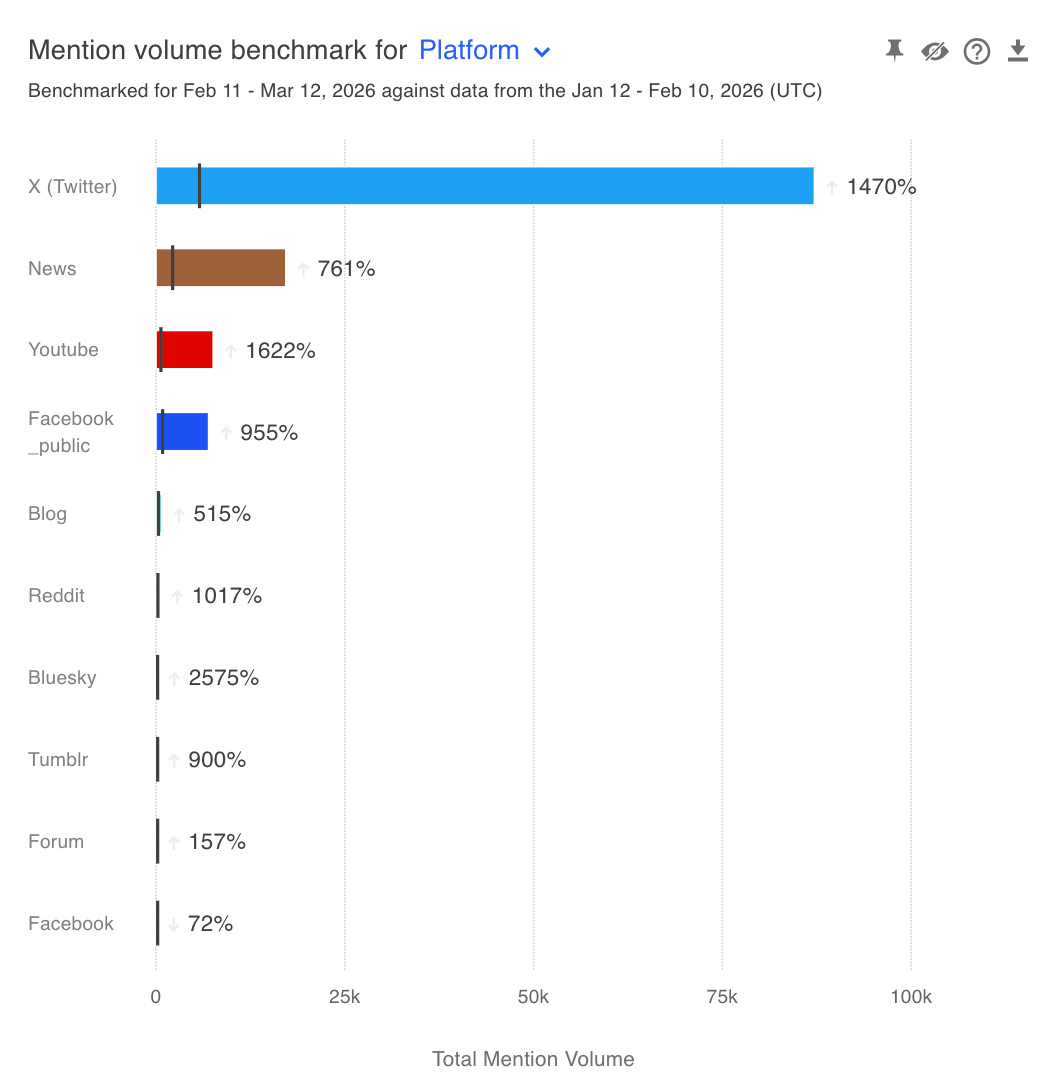
Share of Election Conversation by Platform
- Youth Influence
Global political movements demonstrate how social media–driven activism among Gen Z and younger millennials can rapidly elevate issues such as corruption, insecurity, inequality, and institutional distrust.
In Peru’s fragmented political environment, these dynamics can amplify outsider voices in unpredictable ways.

- Misinformation Risks
The unusually large field of candidates and the fragmentation of political parties create fertile ground for misinformation and rumor campaigns. Content can spread rapidly across platforms such as Facebook, X, TikTok, YouTube, and Instagram with limited oversight.
In a fragmented race where leading candidates poll in the low teens, viral narratives - accurate or not - can influence voter perceptions in the closing days of the campaign.
Digital Campaign Performance
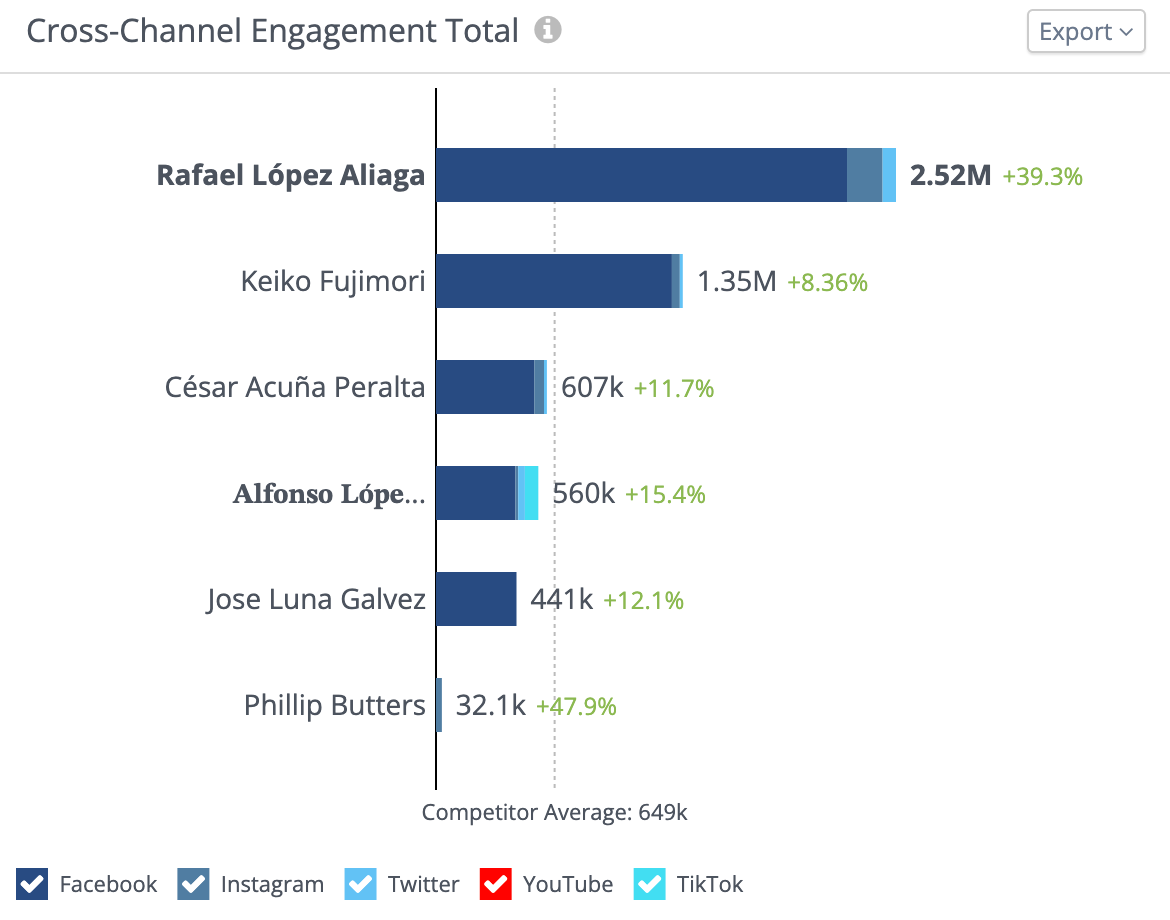
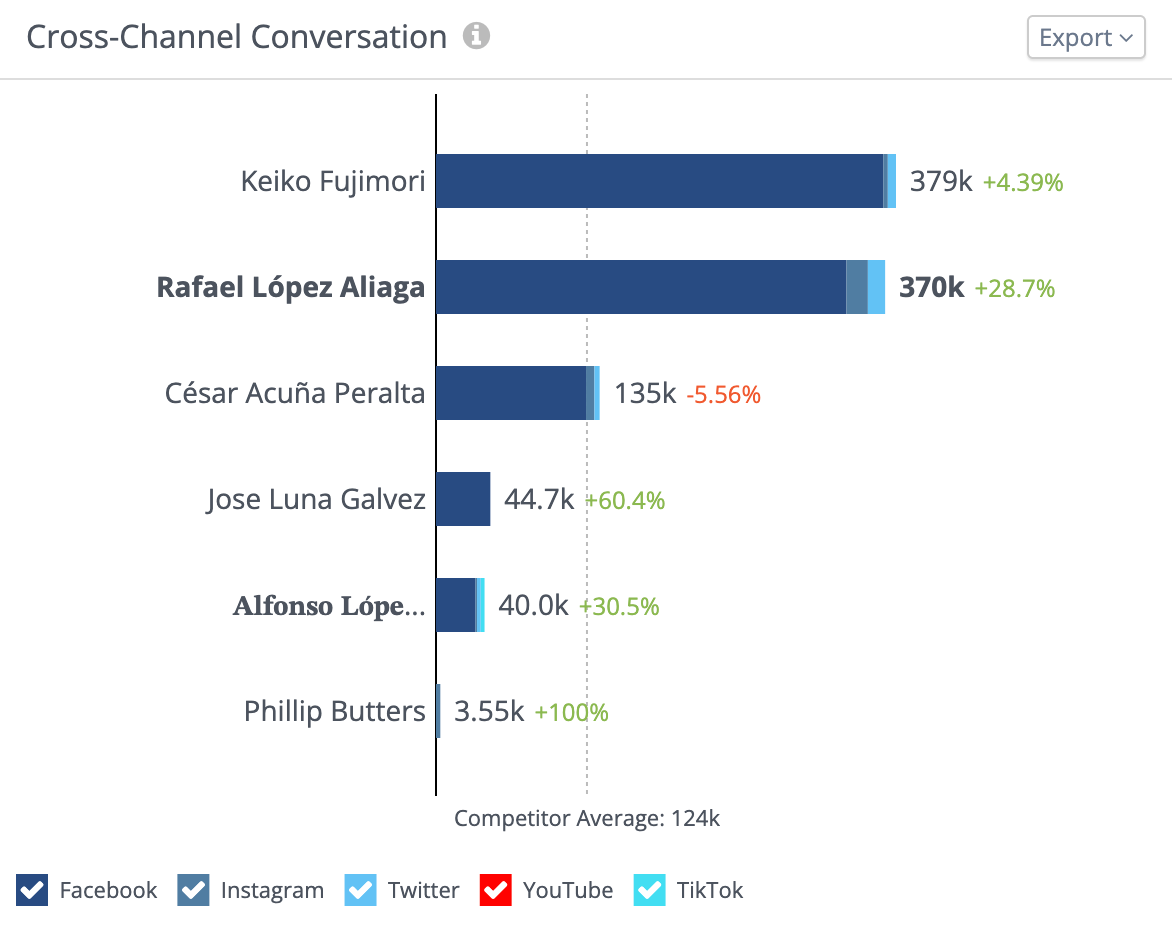
While traditional polling reflects a fragmented electorate, digital engagement patterns provide an additional lens for understanding campaign momentum.
Social media engagement, follower growth, and viral content can provide early signals of which candidates are successfully shaping online narratives.
Implications for the Election Outcome
Peruvian voters have historically made their final decisions in the closing days of campaigns. In today’s digital environment, this pattern may be intensified by the rapid spread of narratives across social media and widespread distrust toward traditional polling.
Digital narratives may ultimately determine which candidate captures the momentum necessary to reach the runoff.
Despite political instability, Peru’s macroeconomic fundamentals remain relatively strong, supported by fiscal discipline and mineral exports. Markets have grown accustomed to leadership turnover, reacting with relative calm even to presidential removals. This paradox—economic resilience alongside political fragility—reduces the urgency for structural reform while allowing instability to persist.
Conclusion
Peru’s 2026 elections highlight a political system defined less by ideological competition than by fragmentation and institutional weakness.
Three trends define the current campaign:
- an increasing shift toward social media as the primary arena for political communication
- a contest shaped increasingly by viral narratives rather than policy proposals
- an electorate observing the process with a mixture of curiosity, fatigue, and detachment.
Until political parties regain credibility and organizational strength, elections in Peru will likely continue producing surprise candidates, fragile governments, and recurring institutional crises.
On April 12, voters may once again go to the polls not to choose the most prepared candidate—but the one least associated with the political class.

